
What was once a refuse dump in Savelugu has been transformed into a modern apparel manufacturing facility with the potential to create thousands of jobs and position Northern Ghana as a major player in Ghana’s export-oriented garment industry.
The transformation of the site into Northshore Apparel Ghana Limited was celebrated on Friday, 28 August 2026, when the facility was officially commissioned in the presence of President John Dramani Mahama, government officials, traditional leaders, development partners, financial institutions, the Board and Management of Ghana Export-Import Bank (GEXIM), and the management and staff of Northshore Apparel Ghana Limited.
The project represents a significant milestone in Ghana’s industrialization and export development ambitions and demonstrates the impact of strategic development financing in transforming local enterprise into productive, export-oriented businesses.
At the heart of the investment is a partnership involving GEXIM, Northshore Apparel Ghana Limited, the Investing for Employment (IFE) facility of KfW Development Bank of Germany and the project promoters. Through a blended financing model combining GEXIM support, KfW-IFE financing and promoter equity, the partners mobilized the capital required to establish and operationalize the factory.
Speaking at the commissioning, the Chief Executive of GEXIM, Hon. Sylvester Adinam Mensah, described the facility as the realization of a vision of a Ghana that produces, exports and creates opportunities for its people.
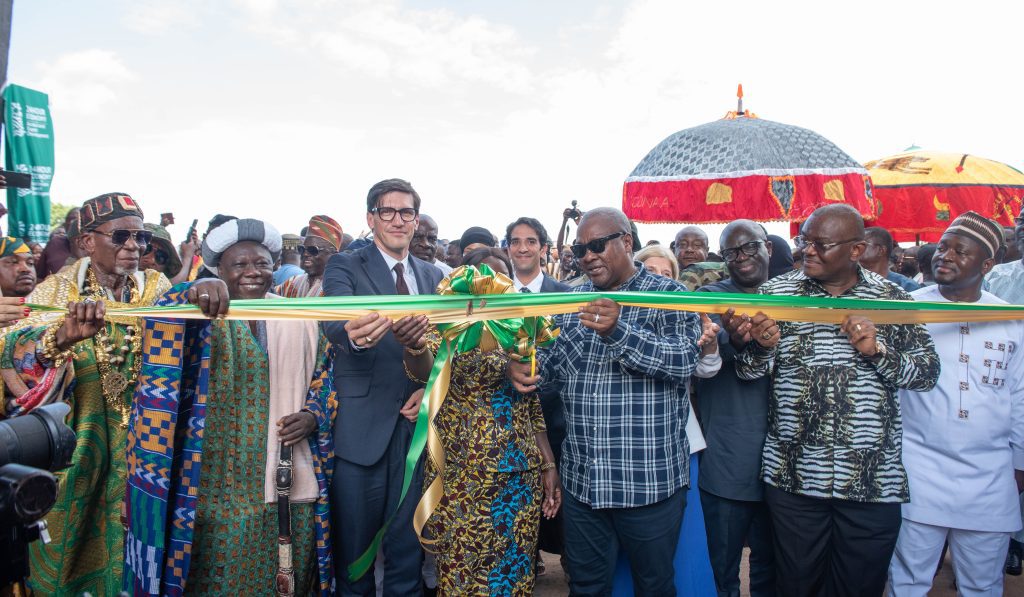
“What you see today is the realization of a vision for a Ghana that produces, exports, and creates opportunities for its own people.”
He said the commissioning marked a new chapter of opportunity, particularly for Northern Ghana.
“It marks the opening of a new chapter of opportunity for Northern Ghana and Ghanaians.”
The Northshore project is aligned with GEXIM’s Five-Year Strategic Plan, which identifies garments and apparel as a strategic sector for targeted investment and economic transformation. The Bank formalized its commitment to the project through a Memorandum of Understanding with Northshore Apparel Ghana Limited in March 2025 to expand domestic garment production, create sustainable employment and strengthen Ghana’s position in the global apparel market.
According to Hon. Mensah, GEXIM’s decision to finance the project was informed by its potential to deliver impact far beyond the commercial returns of the factory.
“When Northshore Apparel presented its proposal to the Bank, we saw more than a commercial venture.
“We saw an opportunity to build an export-oriented manufacturing enterprise in a part of the country where investments of this scale are greatly needed.”
He noted that the project would bring meaningful employment closer to young people in Northern Ghana while demonstrating that globally competitive manufacturing can succeed outside Ghana’s traditional industrial centres.
“We saw the potential to bring meaningful employment closer to the people, particularly young men and women who might otherwise have had to leave their communities in search of opportunities elsewhere,” he observed.
The employment potential of Northshore Apparel is one of the most significant aspects of the investment. Phase One of the facility is expected to generate approximately 3,000 immediate jobs upon commissioning, with employment projected to increase to 10,000 direct jobs when the factory reaches full operational capacity.
“Phase One of this facility alone generates 3,000 immediate jobs upon commissioning. When the facility reaches full operational capacity, employment is projected to increase to 10,000 direct jobs,” the Chief Executive said.
Beyond direct employment, the factory is expected to create additional economic opportunities across transportation, food services, accommodation, maintenance, packaging, logistics and other supporting activities.
More than 2,000 voluntary pre-hire operators have already been trained, equipping prospective employees with market-ready skills for permanent employment.
For GEXIM, the significance of the project lies not only in the number of jobs created but also in the livelihoods and economic opportunities that those jobs will support.
“We are not merely financing machines and buildings. We are investing in people, productive livelihoods and stronger communities.”
The modern facility comprises 50 sewing lines, a 4,000-square-metre cutting and design facility, and 8,000 square metres of raw material and finished goods warehouses. It also includes a dining facility, on-site clinic and crèche, disability-friendly washrooms, a fabric library and fabric laboratory.
The factory has further incorporated a 500kWp solar power system, a biodigester for waste management and a 600,000-litre underground water facility, reflecting an approach that combines industrial production with environmental sustainability and worker welfare.
Hon. Mensah commended Northshore Apparel for incorporating these considerations into its operations, noting that renewable energy, responsible waste management and worker-support facilities are increasingly important standards in global manufacturing and export markets.
The project also has a clear export orientation. Letters of intent from major buyers in the United States and South Africa were received even before production commenced, signaling market confidence in the factory’s capacity to supply international buyers.
“The market has already chosen to believe in this factory. We simply had the good sense to believe in it first,” Hon. Mensah said.
Through Ghana’s trade arrangements, including the African Growth and Opportunity Act (AGOA), Northshore Apparel has the potential to export Ghana-made garments to the United States and other international markets, contributing to Ghana’s foreign exchange earnings and supporting the diversification of the country’s export base.
The Chief Executive described the project as evidence of the potential of Ghanaian-owned businesses to undertake large-scale industrial projects capable of competing internationally.
“Northshore Apparel Hub is proof that wholly Ghanaian-owned businesses can undertake large-scale industrial projects capable of competing on the global stage.”
The commissioning also underscores GEXIM’s renewed focus on financing investments that support value addition, employment, exports and sustainable development.
Hon. Mensah emphasized that the Bank’s financing decisions are guided by the potential impact of projects rather than sentiment.
“Ghana Exim Bank has reset and redefined its lending scope consistent with the President’s vision. It does not lend based on sentiments… behind every facility we extend is placing scarce resources where their impact could be significant.”
For the people of Savelugu and the wider Northern Region, commissioning represents the arrival of an industrial investment capable of changing livelihoods and stimulating economic activity across communities.
The project is expected to create a multiplier effect as workers earn incomes, support their families and patronize local businesses and services. Its success will also create opportunities for suppliers, logistics operators, food vendors, maintenance providers and other businesses connected to the apparel value chain.
Hon. Mensah therefore called on the traditional authorities and people of Savelugu to continue supporting the facility and creating an environment in which it can thrive.
The story of Northshore Apparel is ultimately one of transformation from a former refuse dump to a modern industrial facility; from an underutilized space to a hub of production; and from an investment in infrastructure to an investment in people, skills, jobs and exports.
For GEXIM, the project is a tangible demonstration of the Bank’s role in supporting Ghanaian businesses that have the potential to expand productive capacity, create employment, add value and compete in international markets.
From Savelugu to the global market, Northshore Apparel now stands as a powerful symbol of what strategic financing, local enterprise and a shared commitment to industrial transformation can achieve for Ghana.
Speaking at the commissioning ceremony, President John Mahama described Northshore as the beginning of a new chapter in the industrial history of Northern Ghana.
“I have a pleasant feeling in my heart, because I believe that we’ve planted the first seed that will restore the North back to its glorious industrial past, and that’s what Northshore is just about doing,” the President said.
The President’s remarks captured the wider significance of the facility, which is not merely a garment factory but a strategic industrial investment designed to position Northern Ghana as a competitive manufacturing and export destination.
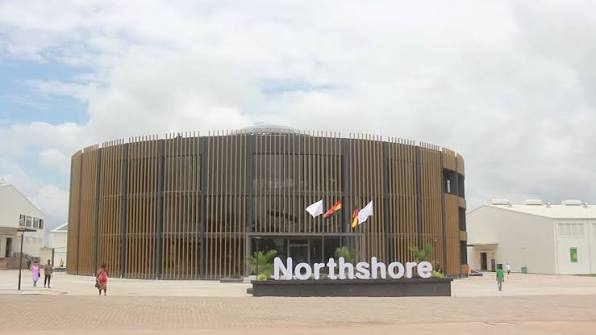
President Mahama said Northshore had challenged longstanding assumptions about the viability of locating major industries in the northern part of Ghana, particularly arguments relating to distance from ports, access to markets and traditional factors of production.
“Northshore has made nonsense of all the arguments about factors of production,” he stated, stressing that the company’s planned multiple-shift operations would create employment opportunities for young people.
Northshore’s Chief Executive Officer, Nurideen Mohammed, described the transformation of the company’s site as symbolic of its philosophy.
“Not long ago, the earth beneath your feet was an abandoned laterite pit that had been turned into a refuse dump. It was where this town sent what it no longer wanted. Today, it is a harbor of hope,” he said.
The facility is being developed in three phases, with subsequent phases expected to expand sewing capacity to 200 lines, introduce additional production facilities and ultimately establish a fabric mill and cotton outgrower scheme across the sub-region.
This planned integration of cotton production, textile manufacturing and apparel production is particularly significant for Northern Ghana, which historically had a vibrant cotton and textile ecosystem.